Stonehenge: Current Understanding and Open Questions
by František Hájek
In recent years, several studies have been produced concerning the ruin of Stonehenge which is located at the centre of the Stonehenge enclosure (a circular bank-and-ditch earthwork). These works have significantly expanded existing archaeological knowledge. According to the prevailing interpretation, the original state of the monument is presented as a set of several freely standing and mutually unrelated groupings of stone elements. Despite the extensive body of archaeological research ( 266 works are cited in [15]), its structural nature is not stated and its original appearance remains unknown. Although a few older studies have considered a roofed structure [3, 4, 5], for various reasons, these ideas were not accepted. Contemporary archaeological opinions also remain sceptical regarding the existence of a roof, primarily because no direct archaeological evidence for it has been uncovered. It has even been stated that there is “not even a trace…” [15] of a roof.
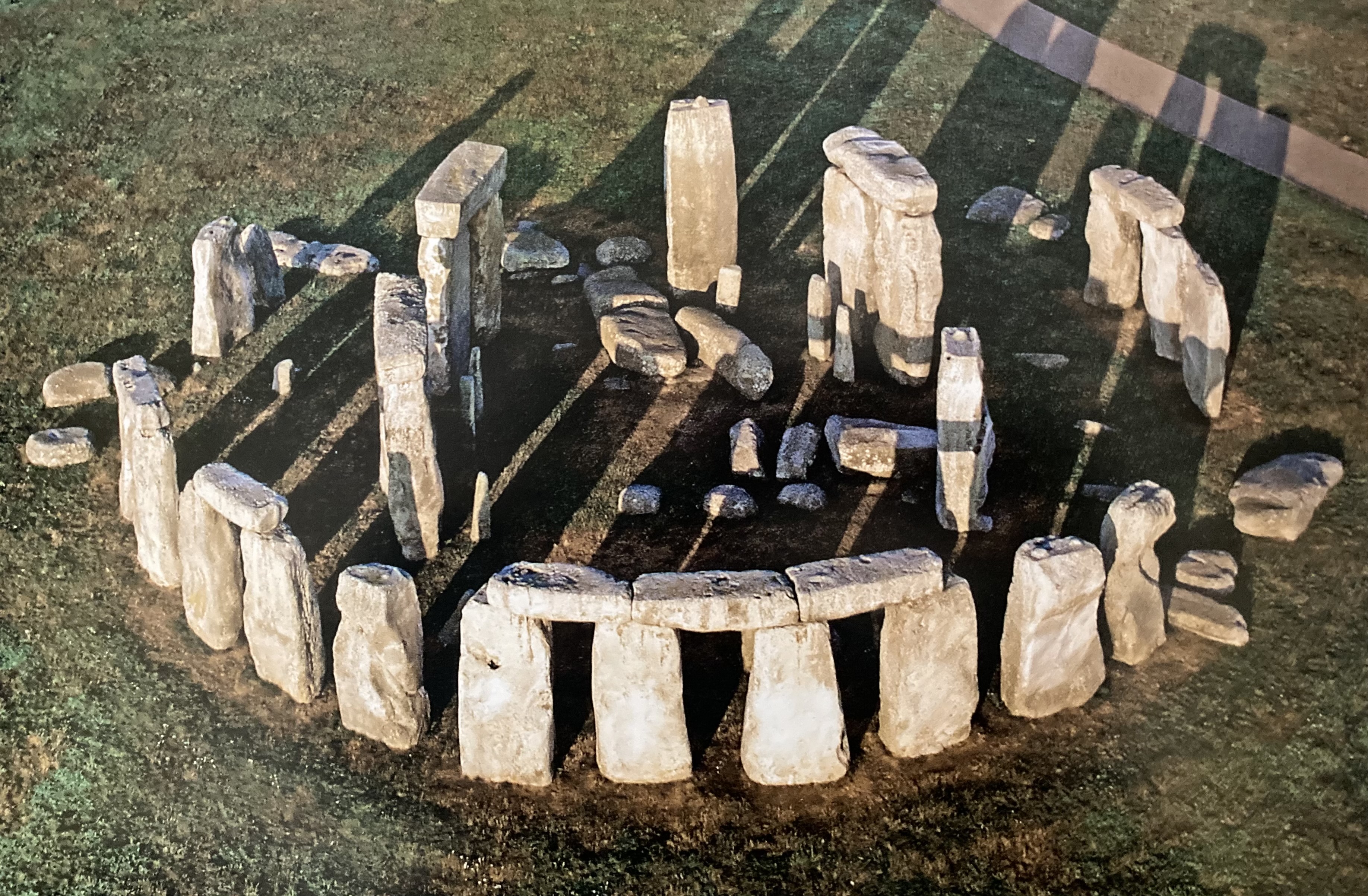
Approximately 44 % of the original structure remains in its original location and position, which clearly indicates that Stonehenge was originally a highly sophisticated structure (Fig. 1). If we are to determine what it looked like, an engineering approach is required in addition to an archaeological one. Such an approach makes it possible to identify the structural properties and, consequently, its original form and even its purpose.
Here, Stonehenge is approached mainly from a structural perspective. Recent structural assessments have provided strong arguments that the monument originally had a roof. These conclusions are based on the structural and spatial properties of Stonehenge‘s elements, as well as on the extant modes of their damage, which, excluding some wind damage, could only have been caused as a result of significant sustained outward radial forces followed by a rapid downward motion of a massive object, i.e., the collapse of a roof. A detailed analysis with relevant evidence was published in [9] and online in [10, 11]. The present contribution is a concise overview of the evidence, while also addressing additional related and as yet unresolved questions.
Construction of the Stonehenge Complex
A historical overview of the development of the Stonehenge complex is included in virtually every comprehensive work on Stonehenge, for example [7, 13, 15, 17, 18]. It is generally described as consisting of five to seven phases. These accounts, however, show that the authors are not in complete agreement, with differences in chronology and in content.
The beginning of Phase 1 is commonly dated to before 3000 BC, when a circular ditch, inner bank and a partial outer bank were constructed. On the inner side of the inner bank, there are 56 Aubrey Holes containing cremation burials. It is therefore assumed that the area enclosed by the bank served as a cemetery for several centuries [15]. Within the enclosed area, there were also postholes of structures of unclear function, and subsequently at its centre a circular arrangement of the Q and R holes left by standing stones.
If every human activity has a purpose, the question arises as to why the bank and ditch were created in the first place. Was it solely for a cemetery, as is commonly presented, or were there other reasons? Given the evident signs of human presence in the area (at least two entrances, the postholes, and a peripheral cemetery), some form of settlement, permanent or temporary, may also be assumed. At that time, farming communities were already sedentary, so the existence of farmsteads in the area is conceivable. Such farmsteads typically consisted of a dwelling, adjacent plots of land, and facilities for livestock. Although each farmstead had its own fence, it may be assumed that the fenced bank delineated the settlement and possibly served defensive purposes as well as provided protection against animals from the surrounding environment.
It is noteworthy that this fundamental protective function of agricultural enclosures is generally not attributed to these earthworks [9]. Although specific dwellings and farmsteads have not been identified within the area, the indications of their existence are strong. It should be noted that approximately 50% of the site has not been archaeologically investigated [13]. In addition, dwellings of that period may have been very simple, for example, made of wattle without plaster, making their remains difficult to detect. It therefore remains questionable whether, in Phase 1, the bank-enclosed area served solely as a cemetery or also fulfilled a function related to some settlement.
Approximately 500 years after the construction of the bank, Phase Sarsen is thought to have begun. With the construction of the complex, stone-built and technically demanding central circular monument of Stonehenge. No comparable developmental predecessor has been identified. Apart from a few individual monoliths, it consisted of two groupings of massive sarsen stones known as the Sarsen Circle and the Sarsen Horseshoe. In the following Phases, these were supplemented by the much smaller and more slender bluestones. The final phase, dated to around 1700 BC, includes the still enigmatic Y and Z holes around the perimeter of the central structure. This phase is thought to mark the end of the complex’s use. The presence of a roof is not mentioned.
Although not explicitly stated, the chronological data for the individual phases probably correspond only to the period of actual construction. However, each phase of construction must have been preceded by some preparatory work. Above all, each phase of the monument had to be designed by someone with the necessary knowledge and experience to do so. For the more technical Phases, such knowledge and experience would not be common. The question of when, where and by whom such knowledge was obtained should be asked. Since astronomical knowledge concerning the extreme positions of the sun and the moon is encoded in the stone structures, these observations had to precede the design. While determining the positions of the solstices required, at a minimum, observations over six months, the lunar extremes required considerably more time to determine, up to 19 years. Since such observations also depended on weather conditions, it has to be assumed that acquiring the relevant knowledge took an extended period and involved some amount of collaboration. When this occurred, or whether the knowledge was simply adopted from elsewhere, is unclear. However, the data had to be available prior to the commencement of the construction of phase Sarsen.
Logistically, prior to design and construction, sources of suitable stone and timber had to be identified, transport routes determined and or constructed, including river crossings, and methods of transport prepared. Only after this could sizing, quarrying, rough shaping, and transportation of the stones to the site begin. Without such preparatory work, the monument could not have been built. Although some tasks may have been carried out in parallel with construction, most had to be performed in advance. If the astronomical observations were indeed made solely for the construction of this monument, then the planning phase, Phase 0, would have taken decades.
It is a puzzling coincidence that the central area enclosed by the bank, laid out at least 500 years earlier, proved to be structurally suitable for the massive and heavy central Stonehenge monument. Another mystery is the fact that the circle of Aubrey Holes was later used for the placement of the Station Stones, according to which the Stonehenge monument was set out. This indicates an unbelievable level of forward planning or the advanced engineering knowledge available before the Phase Sarsen.
The Stones of Stonehenge
Geological analysis has shown that three types of stone were used in the monument [17]. These differed not only in geological origin and source locations but, above all, in their functional properties, mechanical strength, colour, shape, and size. Furthermore, they were shaped into specific forms and surface finishes. This made Stonehenge fundamentally different from other Neolithic structures in Britain and in neighbouring regions, where the use of unworked local stones and mostly freestanding stones was typical.
The largest stones used were sarsens, reaching weights of up to approximately 40 tonnes. These define the monument’s appearance and structure. They consist of very strong and durable siliceous sandstone, seemingly deliberately selected for this purpose. Possible source of these stones include West Woods approximately 25 km away.
The bluestone pillars are significantly smaller and more slender, weighing up to about 3.5 tonnes. These igneous rocks were sourced from several quarries in south-west Wales; the most significant source, the Preseli Hills, lies approximately 225 km away.
The third stone type, the so-called Altar Stone, is a pink sandstone. It is unique within the monument and weighs approximately 6 tonnes. It was long assumed to originate from south-west Wales, but more recent research is re-examining its provenance, possibly locates it’s source as far away as north-east Scotland, an extraordinary transport distance of some 700 km [16].
The Sarsen Stones
With the exception of a few isolated stones, the sarsens form the predominant part of the central monument in the shape of two groupings (Fig. 2):
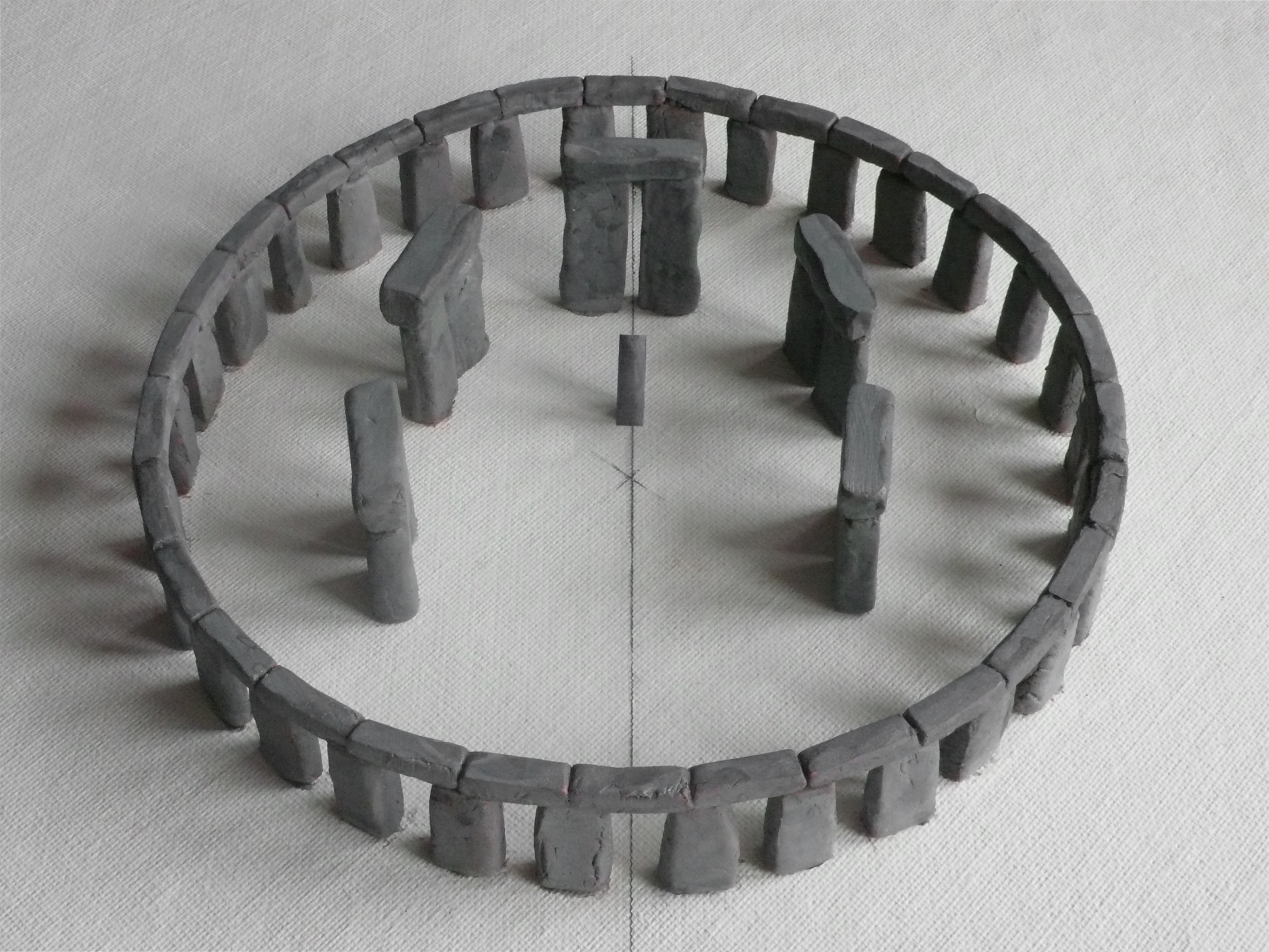
- The outer Sarsen Circle, approximately 30 m in diameter, which has been shown to have been complete [13], consisting of 30 evenly spaced uprights with 30 lintels resting upon them, together in the shape of a perimeter wall with openings.
- The Inner Sarsen Horseshoe, composed of five free-standing trilithons, each consisting of two closely spaced uprights supporting a lintel, functioning not as a gateway but as a supporting structure.
It is specific that the axis of both groupings had an astronomical character, connecting the position of the setting sun of the winter solstice with the rising sun of the summer solstice. Along this axis, the main access route entered the monument from the north-east, beginning at the River Avon. With a width of 13 m, this route also had the character of a transport road for construction materials.
Both groupings consisted of load-bearing, structurally connected uprights and lintels of the columns and beams type; in case of trilithons, of double columns. Their dimensions would have provided them with the structural capability to support the load of a roof, giving them the character of supporting structures—something entirely exceptional in comparison with other contemporary British monuments. This load-bearing ability would not show up in any purely archaeological study.
The only indication of the Sarsen Stones’ direct relationship to other stones in the area of the Stonehenge complex is the rectangular arrangement of the Station Stones surrounding them. The properties of this arrangement, specifically the directions of the connecting lines between the stones, indicate that the sarsen groupings were placed based on the positions and alignment of the Station Stones with their astronomical properties replicated. Knowledge of the solstices and at least two lunar extremes would have been required to determine the location of Station Stones.
The uprights of both sarsen groupings were set into structurally suitable chalk bedrock in the form of foundation sockets. This chalk is load-bearing and located just below ground level, minimising excavation work. Connections between uprights and lintels were of two types: mortise-and-tenon joints in the horizontal direction and tongue-and-groove joints vertically. In the Sarsen Circle, this created a unique and technically significant perimeter stone ring [8] that was intended to stabilise the massive uprights. Together with the heavy lintels, these elements would have supported the roof. Because both groupings functioned as a unified support structure, they were logically erected simultaneously and as the first elements of the building. They were erected uniformly from the outside, allowing precise alignment of their vertical inner faces.
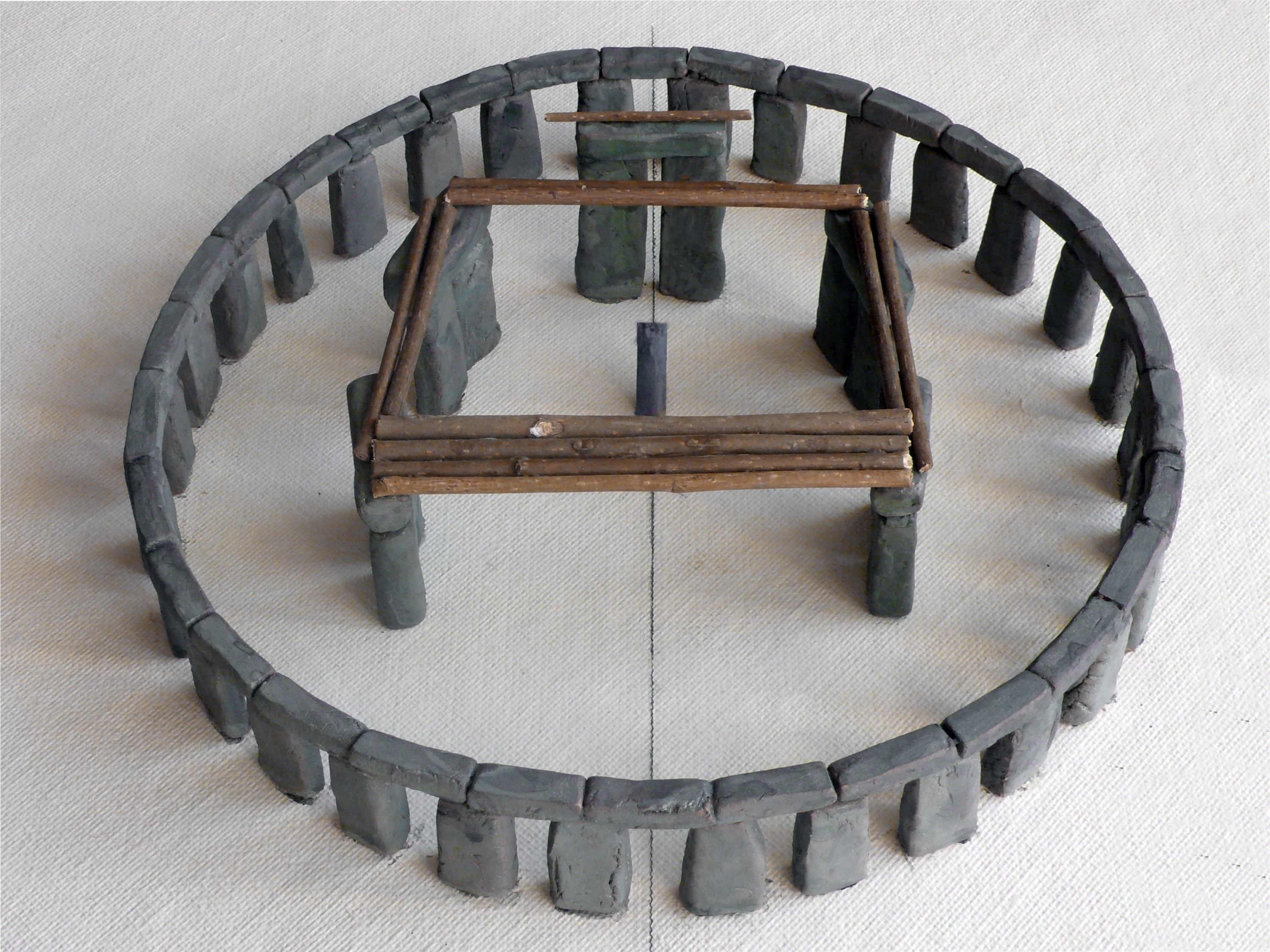
The above provides strong evidence that both the Sarsen Circle and the Sarsen Horseshoe functioned as support structures for a roof [9, 10]. The Sarsen Circle provided continuous peripheral support, while the four lower trilithons supplemented with perimeter beams provided internal support (Fig. 3). The highest central trilithon, known as the Great Trilithon, supported a roof modification, akin to a skylight, that illuminated the interior of the monument in the area of the Altar Stone and the Great Trilithon which was its main purpose.
The supporting system created a building with two large spaces: a central space and a surrounding peripheral space with the main entrance. Their combined capacity was extraordinarily large, easily accommodating up to a thousand people. This spatial arrangement remains clearly visible from above along the monument’s axis (Fig. 1). Since such a view has only recently become available, it is unsurprising that the supporting and spatial function of the sarsen groupings were not recognised earlier.
The number of sarsen uprights and trilithons was 40, 30 + 10. However, counting their supports 12 (months) × 30 uprights plus 5 trilithons, the result approximates the number of days in a year, 365. It is clear that the number of supporting elements was not accidental, since it could have been structurally different. The support system thus had the character of a solar calendar, which was certainly intentional. According to Professor Darvill [7], even the leap year may have been taken into account, although the concept of a leap year is generally thought to have emerged much later.
It is generally assumed that only stone tools were used in the construction of the elements. However, in discussing the shaping and surface finishing of certain uprights, such as stones 10 and 16, Harding [12] addressed the previously unresolved question of how such work could have been achieved using stone tools alone. A similar question applies to the form of the mortise-and-tenon joints.
Several theories exist regarding the routes and methods used to transport the massive sarsen stones [17]. Transport on sledges pulled by human labour is most commonly assumed. This method, however, would have required thousands of workers and decades of effort [15], not to mention the time needed to construct transport routes. Recently, a more realistic and promising method using draught cattle has been proposed [19], which would fundamentally change estimates of transport duration and labour requirements. In terms of route, the only known section connects Stonehenge with the Avon River. The same is true of the nearby Durrington Walls. However, how the river could have been used to transport the stones is still a question.
Construction with sarsen stones involved site preparation, setting out both groupings, refining the shapes and surfaces of the stones, excavating the sockets, erecting the stones, and finally removing surplus excavated material. The question of whether this material was used to augment the outer bank remains unresolved. Given the unique structural solution of Stonehenge, it is also puzzling how such a building could have been created without an experimental precursor. Could certain construction details of the bluestone pillars suggest that Stonehenge had an autonomous origin?
The Bluestones
Recent studies suggest [15] that bluestones may already have been used in the central Q and R hole circles that predate the sarsen phase and were removed. It is also postulated that they may have been installed as freestanding pillars in the Aubrey Holes. Their surviving remains are visible in Fig. 1.
For logistical reasons, the bluestone pillars located in the centre of the monument may have been erected only after both sarsen groupings were completed. They were installed from the inner side of the sarsen structures. Over time, their number changed. In their final arrangement, they formed the Bluestone Circle and Bluestone Horseshoe, estimated to have consisted of 84 pillars of varying shapes and sizes.
The issue of bluestones occupies a central place in Stonehenge literature, to the point that one might speak of a dominant research focus. Questions concerning their origin, properties, sources, and developmental use within the monument appear largely resolved, as do findings regarding their possible prior use elsewhere. However, questions related to their demanding transport and their purpose remain unanswered. Ultimately, they appear to have played a supplementary but important role within the monument unrelated to its structural properties. The most plausible hypothesis, proposed by Professor Parker Pearson [15], is that they served as memorials to ancestors.
The Altar Stone
The Altar Stone has a distinctive slab-like shape, unique within the monument. At present, it is embedded in the ground up to its upper surface and is partially covered by fallen stones from the Great Trilithon, leaving only part of its upper surface visible. As far back as historical memory reaches, it has lain in this position. It was therefore classified as a recumbent stone [1, 16], and its name reflects this interpretation.
Analysis of the movement and eventual partial collapse of the leaning pillars of the Great Trilithon has shown that the Altar Stone originally stood upright and acquired its recumbent position after being struck by a falling lintel from the tilting trilithon [11]. This finding confirms Professor Atkinson’s excavation-based conclusions regarding its original upright position, its bevelled end characteristic of a standing stone, and the location of its socket [1]. As a standing stone, it complemented the recording of both solstices, as sunlight illuminated it on solstice days (fig.2). Therefore, it may, or rather should be called Solstice Stone.
For the farming community inhabiting the area at the time of Stonehenge’s construction, both solstices were significant. After the winter solstice, daylight gradually lengthened and a new year with a new production cycle began. After the summer solstice, days gradually shortened and the working year drew to a close. It can be assumed, however, that the beginning of the year held greater importance. Given the on-site evidence of bones and teeth of pigs slaughtered in winter period, originating from other locations, it may be assumed that the roofed Stonehenge, with its standing Altar Stone and exceptional capacity, may have functioned not only as a solar calendar and a memorial to ancestors, but also as a venue for celebrations marking the beginning of the new year, possibly even a New Year festival.
The original source of the Altar Stone has recently been questioned, with investigations now exploring the possibility of a north-east Scottish origin [16]. In this context, speculation has arisen as to whether Stonehenge might represent a unification of the British community. However, as noted above, the assumption that the Altar Stone was originally recumbent is incorrect, undermining one of the key premises of this hypothesis.
The Roof of Stonehenge

As mentioned in the introduction, earlier roof proposals [3, 4, 5] were not accepted. Although the idea of a roofed structure is fundamentally correct, the specific proposals presented various modern spatial timber constructions, and as such, their elements were modern in character. The curved forms proposed in [5], as well as the slender linear elements in [3, 4], are inconsistent with the period of construction. In addition, the individual roof structures are not fully compatible with their supporting stone structure and are also technologically and constructionally complex for the late Neolithic period.
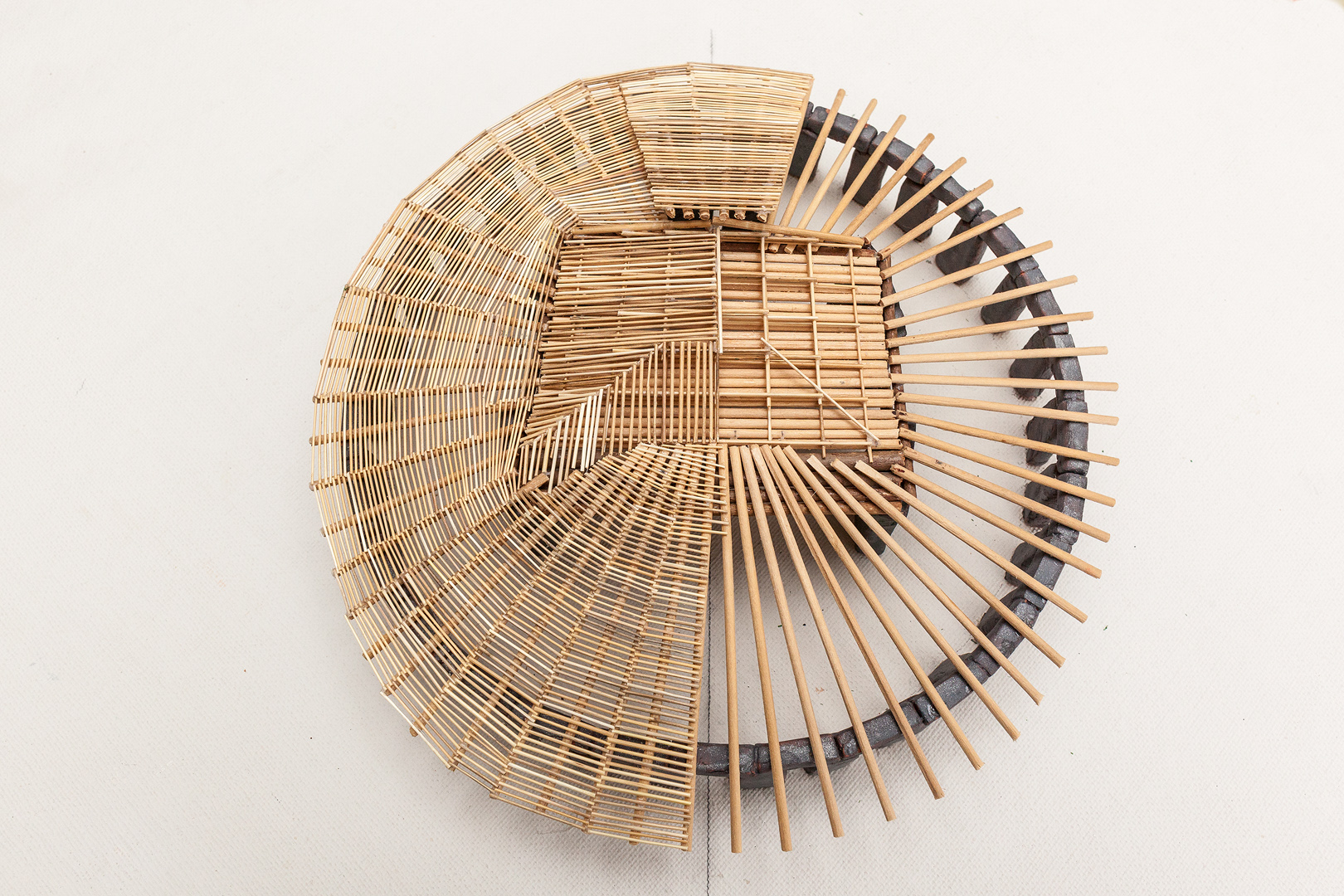
The roof proposal presented in [9, 10] was derived directly from the clear layout of the stone supporting structure and its functional properties. This layout predestined the use of a simple timber roof (Figs. 4, 5) constructed only from straight logs of different diameters and lengths. This approach made it possible to produce a reconstruction that fully corresponds to the properties of the stone supporting structure, the manufacturing capabilities of the period, and at the same time provides a credible representation of the monument’s original appearance. From a constructional perspective, it was also technologically simple.
In its final form, the roof would have had the shape of a spherical cap with a skylight [9, 10]. Except for the skylight, its form would thus have been similar to the roofs of the monuments at Newgrange in Ireland and the Soto Dolmen in Spain. However, while both of these monuments were built entirely of stone and contained only minimal interior spaces, Stonehenge was a large-capacity, weather-independent, two-space structure with a timber roof (Figs. 6, 7). It can therefore very probably be regarded as the Central Building of the Salisbury Plain.
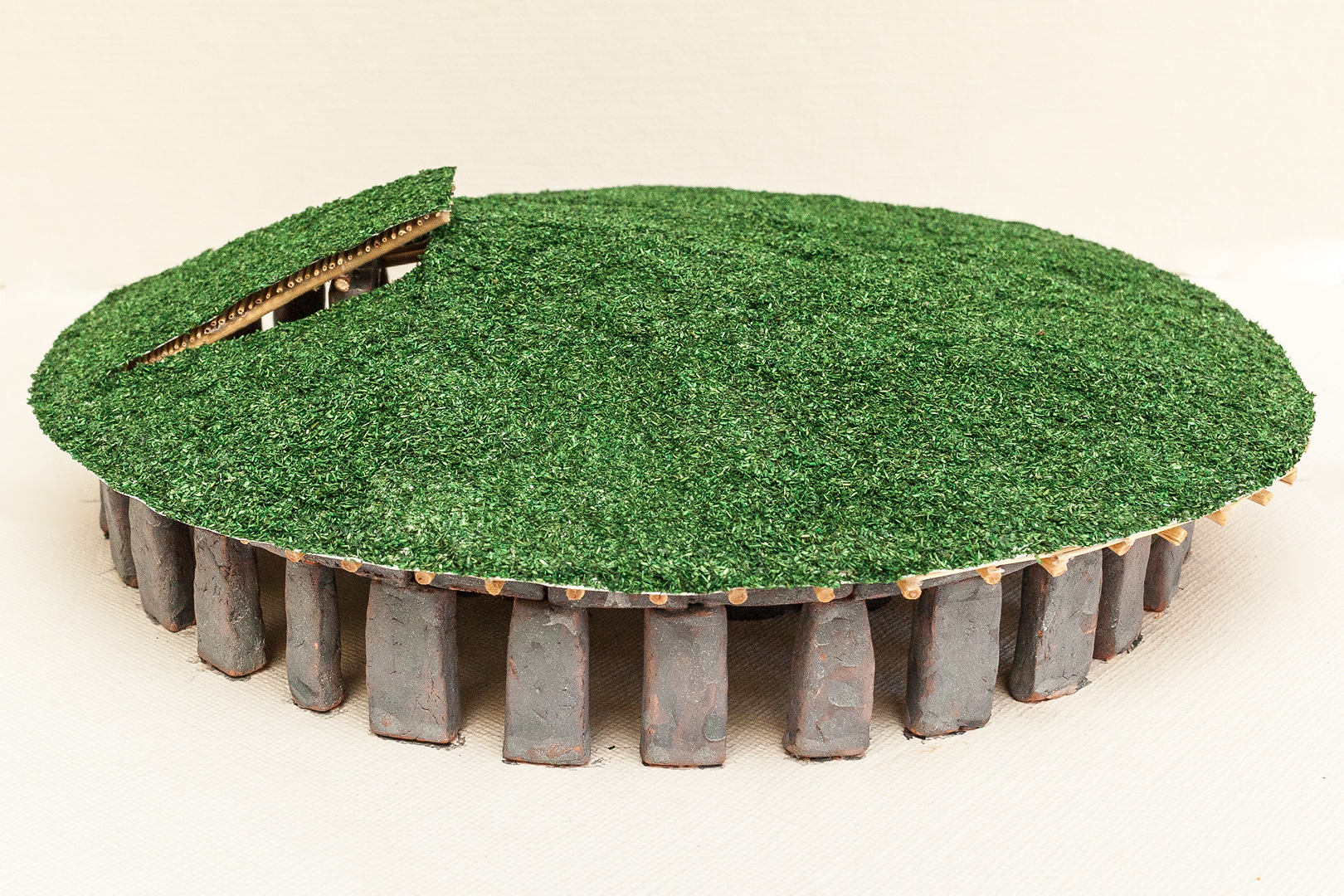
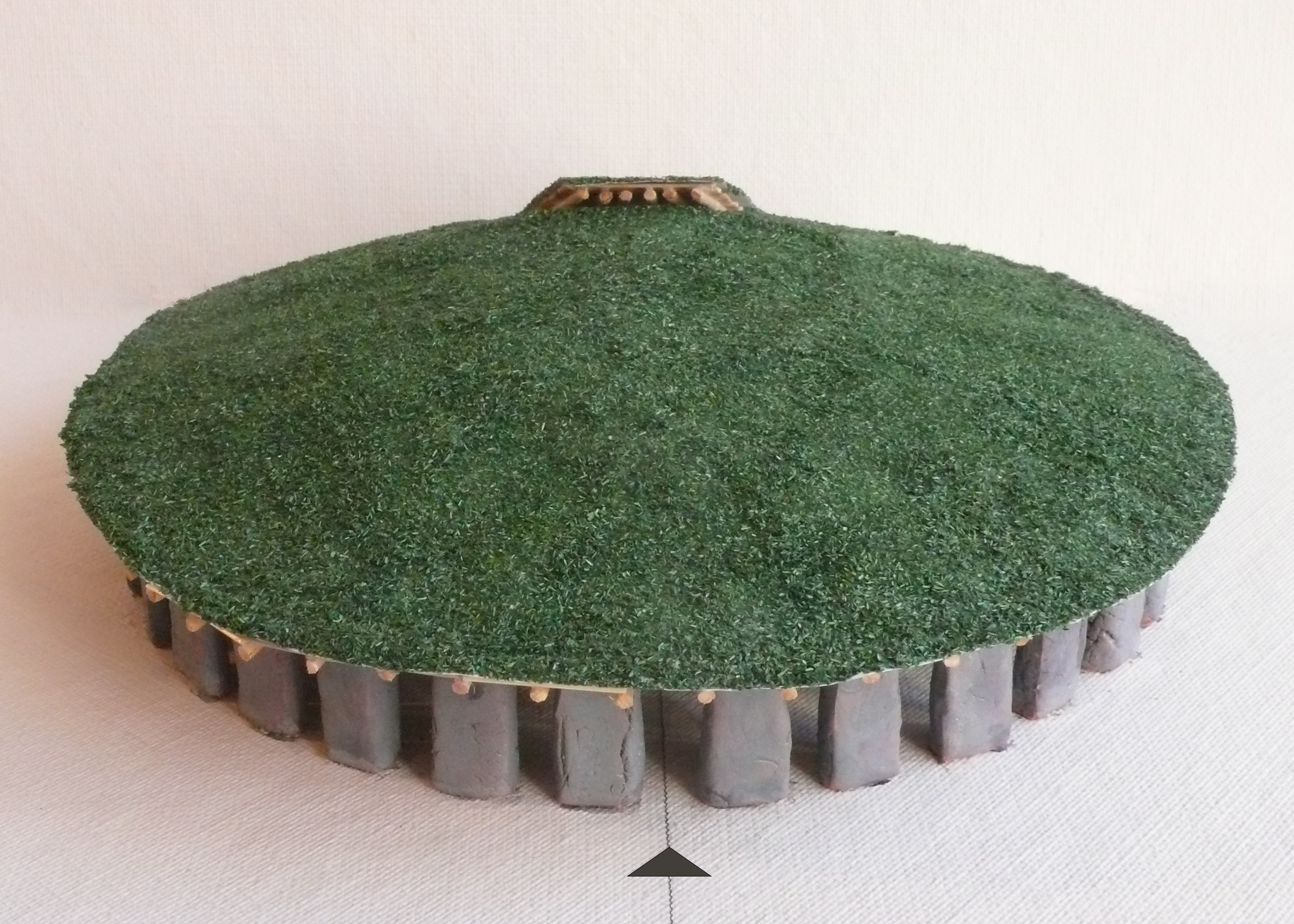
Fig. 6 Roof of Stonehenge with skylight, viewed from the southeast, & Fig 7 from the northeast; very likely the original appearance of the Central Monument of Stonehenge. ©František Hájek
Destruction of Stonehenge
Prior to its reconstruction in the last century, and in some cases still today, the elements and structures of the destroyed monument exhibited several types of damage [10]. The primary damage was evident in the outward leaning of the uprights of the Sarsen Circle, the Great Trilithon, and the bluestone pillars of the Bluestone Circle and Horseshoe. There is also clear damage to the tops of many bluestone pillars. Additional manifestations of destruction included the collapse of both uprights and lintels, those in situ and also the displaced fragments, some of which are fractured.
All of these were consequences of the roof’s action and its impact in the period prior to and during the collapse. Detailed static analysis of the leaning uprights showed that the perimeter stone ring was not strong enough to support the mass of the roof and therefore failed to maintain the long-term verticality of the outer uprights, which therefore gradually tilted outward.
As a result of the tilting, the roof beams lost their support and collapsed. The current monument shows that this shortcoming had been identified with, ultimately unsuccessful, corrective measures taken. This is highlighted by the hitherto unexplained Y and Z holes, which housed rescue perimeter struts. However, this intervention did not ultimately stop the uprights from tilting. Thus, the gradual loss of support for the roof beams led to a collapse and the loss of functionality.
Resume
- Stonehenge was originally a roofed building.
- There is no full understanding on what basis, when and how Stonehenge was built, nor a rationale for its location away from the sources of its stone constituents.
- The two sarsen groupings, the iconic Sarsen Circle and the Sarsen Horseshoe, functioned together as a support structure for a wooden roof, while the two other grupings the Bluestone Circle and Bluestone Horseshoe – as well as the unique Altar Stone, were interior features.
- This is demonstrated by the load-bearing and spatial properties of the Sarsen Circle, the five trilithons of the Sarsen Horseshoe, and the characteristic damage observed in the sarsen and bluestone elements.
- A reconstruction of the roofed two-space object provides a highly plausible idea of its original appearance, showing similarities to Newgrange (Ireland) and the Soto Dolmen (Spain).
- The monument contains a solar calendar, potentially with a system for tracking the days of the year, the winter and summer solstices, and possibly the lunar extremes.
- The Altar Stone, now lying flat, originally stood upright and served as part of the solstice axis. Therefore, a more apt name may be the Solstice Stone.
- With the standing Altar Stone, the astronomical orientation of the monument likely enabled a marking of the winter solstice and possibly New Year’s Day, as the major festival of the Salisbury Plain community.
- Stonehenge’s substantial capacity supports the idea that it was used for large communal celebrations, especially of the New Year. Together with ancestral veneration and the marking of time, these were most likely the main purposes of the object.
- The unexplained Y and Z holes around the Sarsen Circle were not a final construction stage/phase, but evidence of an unsuccessful attempt to stabilise the outward-leaning circle uprights with external struts.
- The gradual destruction of the monument resulted from the inadequate structural performance of the Sarsen Circle and the Great Trilithon. Once the roof failed, the building lost its function and was abandoned.
- The exceptional properties and complete uniqueness of Stonehenge suggest that, as a weather-independent multipurpose building, it was the most significant building of Salisbury Plain and one of the oldest sophisticated engineering works known worldwide.
Acknowledgements
The author would like to thank Allphoto.cz for permission to use his photograph, Fig. 1. Thanks also to Mr. John Nicholson for his English translation, and to my daughter, Ms. Karla Hanzlová, for help with the graphics.
Bibliography:
[1] Atkinson, R.J.C.: Stonehenge, 1979, Third edition. Harmondsworth: Penguin
[2] Banton, S: The Stones of Stonehenge, http://www.stonesofstonehenge.org.uk/
[3] Bedlam, B: Why would it not have a roof? www.stonehenge.tv/roof.html. 04/2017
[4] Carter, G: Twelve reasons why Stonehenge was a building, 2012. http://structuralarchaelogy.blogspot.cz/2012/03/twelve-reasons-why-stonehenge-was.html
[5] Ewbank, S: Sunhenge – Stonehenge had a Roof. http://sunhenge.uk, 04/2017
[6] Darvill, T, Marshall, P, Parker Pearson, M, Wainwright, G: Stonehenge remodeled, Antiquity 86, 2012.
[7] Darwill, T: Keeping time at Stonehenge, Antiquity 2022
[8] Hájek. F: Stonehenge – najstaršia stavba s obvodovým ťahadlom (Stonehenge – the oldest structure with a peripheral tie), Beton, 6/2015.
[9] Hájek, F: Was Stonehenge a roofed temple? The Structural Engineer. 5/2017
[10] Hájek, F: Reimagining Stonehenge: The Roof Theory, www.stonehengeroof.com, Solving Stonehenge,2025
[11] Hájek, F: Did the Altar Stone originally stand upright or lie flat? www.stonehengeroof.com, Solving Stonehenge, 2025
[12] Harding P: Demystifying sarsen: breaking the unbreakable. The Antiquaries Journal. 2025
[13] Johnson. A: Solving Stonehenge, The New Key to an Ancient Enigma, Thames & Hudson, 2008
[14] Ochoa, M-A: What is a Henge? https://www.english-heritage.org.uk/visit/inspire-me /what-is-a-henge
[15] Parker Pearson, M.: Stonehenge, a brief history. Bloomsbury Publishing Plc, London 2023
[16] Parker Pearson, M., Bevins, R., Bradley, R., Ixer, R., Perace, N., Richards, C: Stonehenge and its Altar Stone: the significance of distant stone sources, Archaeology International, 2024
[17] Pitts, M: How to build Stonehenge? Thames & Hudson Ltd, London, 2022
[18] Stonehenge, https://en.wikipedia.org/wiki/Stonehenge 2025
[19] The truth behind Stonehenge, The Guardian, 27.08.2025
This is an Open Access article, distributed under the terms of the Creative Commons Attribution-NonCommercial-ShareAlike 4.0 International License (CC BY-NC-SA 4.0), which permits non-commercial use, distribution, and reproduction in any medium, provided the original work is properly cited and shared under the same license.
 Solving Stonehenge